You can spot a template from across the room. The stock hero with the gradient overlay. The three feature cards with the circle icons. The testimonial slider. The “trusted by” logo strip in grey. None of it is wrong, exactly — it’s just familiar, and familiar reads as cheap.
I sell templates for a living, so this is my whole problem: how do you make something reusable that doesn’t feel reused?
Kill the defaults
Most “template look” comes from accepting defaults. Default spacing, default type scale, default Bootstrap-ish proportions. The fix isn’t more decoration — it’s choosing every value deliberately. A type scale with real contrast. Spacing that breathes. Margins that look like a magazine, not a CMS.
Type does the heavy lifting
Nothing changes the feel of a page faster than typography. A confident serif paired with a clean grotesque will make a plain layout look intentional. The templates I’m proudest of are barely “designed” at all — they’re just set well. Good type on a quiet grid beats a busy layout every time.
One idea, committed
A custom-feeling site usually has a single organising idea it commits to fully. Vellum commits to greige restraint. Meridian commits to a warm, espresso-bar darkness. The template feeling comes from hedging — a bit of everything so it works for everyone. Pick one idea and follow it off the cliff.
Details that imply a human
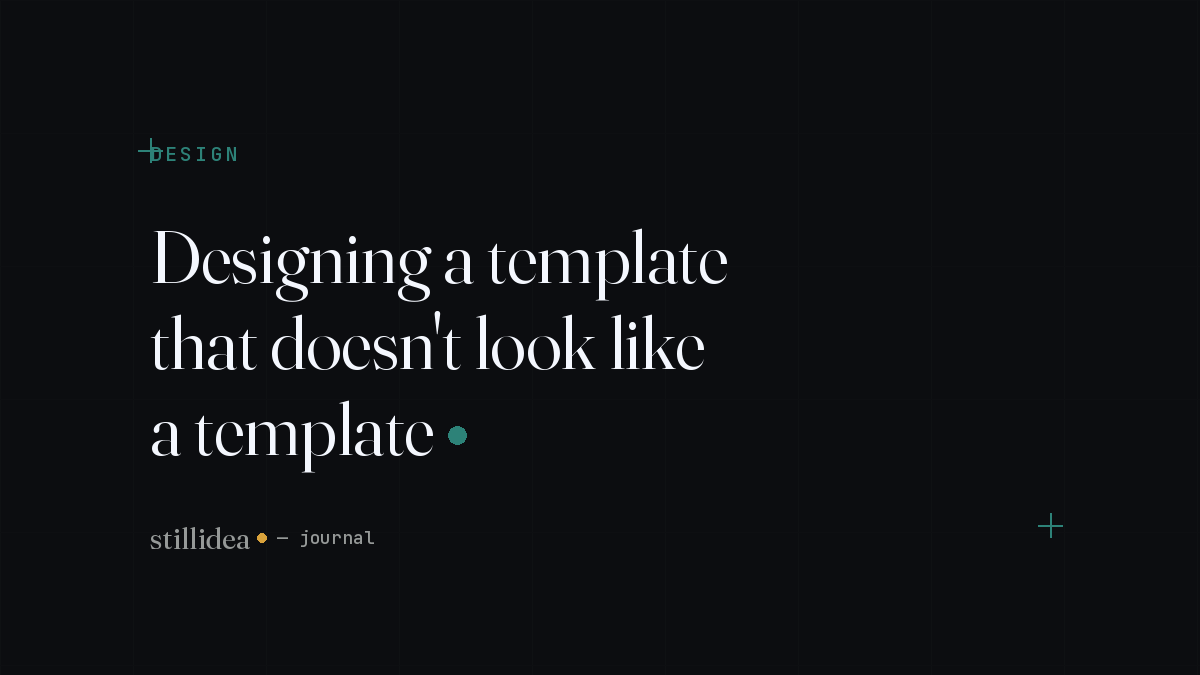
Crosshair ticks in the corners. A monospace label where you’d expect a generic caption. A full stop used as a logo. None of these are necessary. All of them whisper someone made specific decisions here. That whisper is the entire difference between “bought theme” and “looks custom.”
The irony: making a template feel un-template-like takes more design work, not less. But it’s the only way to sell taste to people who have it.